Royal rumble, and a story of love and betrayal
It’s nearing February 14 once again, haha, and since we’re on the topic of the secret lives of the rich and famous, I would like to take this opportunity to once again pick on them rich and famous. Haha.
Seriously, if there is one family in this country that has been treated like royalty, I’d say it is the Cojuangcos. It so happens that the month of May this year affords us the rare opportunity to enthrone one of two members of that royal family in the running to be king. Noynoy, the current frontrunner in that royal selection process called the elections, is of course the son of Ninoy Aquino and Cory Cojuangco Aquino — the so-called Father and Mother of “Philippine Democracy”. (The latter phrase in quotation marks, as its existence — like that of England’s Camelot — has been seriously questioned by scholars.) Pitted against Noynoy is his cuz, Gloria Arroyo’s knight in shining armor, Gibo Teodoro. Before leaving the side of his uncle Danding Cojuangco, Gibo is said to have been Danding’s favored one. The Aquino-Cojuangco’s’ nemesis since the Martial Law days, Danding tutored Gibo to challenge the Aquinos in politics, while cementing the former’s economic power.
Unfortunately, this royal rumble is in danger of not happening at all. Gibo is way behind in the survey game, while Noynoy is locked in a neck-and-neck battle with one who claims to champion people who swim in an ocean of garbage (i.e. poor people). Manny Villar is a veritable gatecrasher in Noynoy’s Camelot, and could very well shortcut his way from C-5 to the Palace if the yellow army from “Bahay na Puti” do not ambush him on the way.
* * *
Like I said, it’s Valentine’s Day in a few days, so let me share with you a story of love, but also of betrayal. It is the purported story of Antonio Luna, the great general of the Katipunan and the armed resistance against US colonialism at the turn of the 20th century. It is also purportedly about a Cojuangco, and how this Cojuangco supposedly came to meet the love of her family’s life — money.
I wrote this article for the Collegian 10 years ago (the issue is dated February 14, 2000).
* * *
Ang romansa at trahedya ni Heneral Antonio Luna (isang kuwento ng pag-ibig)
Batbat ang nakaraan ng mga kuwento ng pagtataksil ng mga tao sa kanilang sinumpaang pag-ibig – sa bayan man o sa kasintahan.
Ganito ang kuwento ng trahedyang pag-ibig ni Antonio Luna, dakilang heneral ng Digmaang Pilipino-Amerikano, matinitk na taktisyan at tahasang anti-Amerikano. Dahil bukod sa pinatay siya mismo ng kapwa Pilipinong mga sundalo, ipinagkanulo din ng naging kasintahan ni Luna ang tiwalang ipinagkaloob sa kanya ng heneral.
Metanoya
Sa unang bahagi ng himagsikan laban sa mga Espanyol, hindi lumahok si Luna sa Katipunan. Wala siyang tiwala na kaya nang magsulong ng isang armadong rebolusyon ang mga Pilipinong walang pag-aaral at walang pagsasanay sa digmaan. Kinundena pa niya ang rebolusyon at hinikayat ang mga nag-alsa na sumuko sa mga Espanyol.
Ngunit nang ipatapon siya ng mga kolonyalista sa Espanya dahil miyembro raw siya ng Katipunan, nagbago ang pagtingin niya sa rebolusyon. Isinumpa niya ang lahat ng kanyang nasabi o ginawa laban sa Katipunan. At lumahok na siya sa ikalawang bahagi ng himagsikan.
Nang itatag ang Kongreso ng Malolos noong Setyembre 1898, hinirang ni Aguinaldo si Luna bilang isa sa mga kumisyuner. Ngunit nahati ang Kongreso sa paksiyong nagtaguyod ng agad na kalayaan at pakikidigma laban sa bantang kolonyalismong Amerikano, at sa mga ilustradong nakipagsabwatan sa bagong mga mananakop na nagpoprotekta sa kanilang kapangyarihan sa ekonomiya at pulitika. Dahil sa paninindigan ni Luna laban sa mga Amerikano, pinag-initan siya ng mga lider ng Malolos. Kasama rito sina Aguinaldo, Felipe Buencamino, at Pedro Paterno, na nais makipagkasundo sa mga mananakop.
Nawawalang Anak
Ngunit bukod sa panunuligsa sa mga konserbatibo’t mapagkanulo, maraming historyador ang nagsasabi na may iba pang kuwento ang pamamalagi ni Heneral Luna sa Malolos noong 1899.
Nasa Malolos ang dating tinitirhang mansiyon ng mga Cojuangco. Pagbukas ng Kongreso ng Malolos, sinasabing nakitira sa mga Cojuangco ang ilang prominenteng lider ng gobyerno, kabilang na si Luna. Dito nagsimula ang kuwento umano ng pag-iibigan nina Luna at Ysidra Cojuangco, matriyarka ng angkang Cojuangco sa Paniqui, Tarlac.
Nagbunga, diumano, ng isang anak ang pag-iibigan nina Luna at Cojuangco.
Ayon sa pananaliksik ni Hilarion Henares, dating propesor at kolumnista, nilisan ng mga Cojuangco ang Malolos patungong Paniqui, Tarlac upang makatakas sa kahihiyang dulot ng pagkabuntis diumano ni Ysidra na walang kilalang asawa.
Ang naturang “anak sa pagkakasala,” ay nabuhay at ipinaampon daw sa kapatid ni Ysidra na si Melecio. Ayon pa kay Henares, marami ang ebidensiya na si Antonio Cojuangco Sr., lolo sa tuhod ni Tonyboy Cojuangco (asawa ng artistang si Gretchen Barretto), ang siyang nawawalang “anak sa pagkakasala” ng dalawang magkasintahan.
Nawawalang Pera
Sa huling taon ng buhay ni Heneral Luna, ipinatago diumano niya sa kasintahang si Ysidra ang mga kayamanan ng rebolusyonaryong gobyerno. Ayon sa historyador na si Alfredo Saulo:
The convoy of carts loaded with a huge amount of Spanish gold and silver coins seized from local treasuries in the Ilocos region, leading this convoy through forested areas up to the final destination in Paniqui, Tarlac, in the house of Ysidra Cojuangco, girlfriend of General Antonio Luna.
Nang paslangin si Luna noong Hunyo 5, 1899 sa Cabanatuan, sa utos diumano ni Heneral Aguinaldo, naiwan kay Ysidra ang mga ginto ng rebolusyon. At dahil hindi hayagan ang relasyon ng magkasintahan, hindi alam ng karamihan sa mga lider kung saan o kanino iniwan ni Luna ang mga ginto.
Hindi na isinauli ni Ysidra ang mga ginto.
Malaki ang ebidensiya, ayon kay Henares, na ang mga gintong ipinatago ni Luna kay Ysidra ang dahilan ng biglang pagyaman diumano ng mga Cojuangco. Matagal na ring alam ng mga viejas familias sa Gitnang Luzon na sa rebolusyonaryong gobyerno ni Aguinaldo at ng Katipunan nanggaling ang kayamanan ng pamilyang Cojuangco.
Upang itago raw ang tunay na pinagmulan ng kanilang yaman, sinasabing ipinabura ng pamilyang Cojuangco ang lahat ng rekord na maaaring magpatotoo na anak nga ni Heneral si Antonio Sr. Nawawala ang kanyang mga rekord ng pagkabuhay sa mga simbahan ng Malolos at Paniqui, at maging sa Ateneo de Manila, kung saan siya nag-aral.
Kung paniniwalaan ang historyador na si Dr. Vivencio Jose, pataksil na ipinapatay ni Aguinaldo si Luna. Maingay at delikado kasi siyang katunggali hindi lamang para sa kapangyarihan ni Aguinaldo, kundi ng mismong mga mananakop na Amerikano. Isang malaking kawalan sa mga nakikidigmang Pilipino ang pagkamatay ni Luna. Malaking kataksilan din ang di pagsauli diumano ng kasintahang si Ysidra ng mga gintong malaki pa sana ang maitutulong sa rebolusyon.
Kataksilan at kasinungalingan diumano ang naging pundasyon ng kayamanan ng mga Cojuangco, tulad din ng kataksilan at kasinungalingan na naging pundasyon ng Republika ni Aguinaldo.
Sanggunian:
Agoncillo, Teodoro. “Antonio Luna: The hero who never won a battle.” sa Weekend, 8 Hunyo 1993.
Henares, Hilarion Jr. “Antonio Luna’s Missing Descendant.” sa Smart File 14-15, 1993.
Jose Vivencio R. “The Rise and Fall of Antonio Luna.” Quezon City, UP, 1972.
Some of Henares’ claims can also be read here and here.
Postscript to a postscript: Did Piolo Pascual inadvertently just play another Red fellow traveller?

With Cory, Ninoy Aquino during his trial in a military court, wearing a jacket that to me evokes images of Mao Zedong, Fidel Castro and Hugo Chavez. Haha. (Image found through Google, in a blogsite, whose blogger probably found the image through Google, too.)
Noynoy Aquino as a topic in this blog should have been over, had I not, over the weekend, curiously pored over some clippings of old Philippine Collegian issues when I was part of that publication. I had just finished the previous blog entry on Noynoy’s rebuff of Satur Ocampo’s challenge to the senator to make a public stand for genuine agrarian reform when I serendipitously came across an article that I once edited for the Collegian. The article was written by Laiden Pedrina in August 21, 2000. I was features editor and assigned Laiden to write about it — I remember she was reluctant to write about the topic, which was the varied connections the fallen politician/national hero/guy-on-the-P500-bill had with the Philippine Left.
The article, titled “Was Ninoy red?”, raised interesting historical facts. One was that although Ninoy was not in any way a communist, he at least gave communism a benefit of the doubt. Cited in the article was an essay by Gregorio C. Brillantes in 1986, titled “Consorting with the Reds at Early Age.” Brillantes wrote that when Ninoy was a correspondent for the Manila Times during the 1950s, Ninoy reported on the fear that Asians had on a looming war against the “East and the West” (probably the Soviet Union and the United States) which was much more than fear of the supposed spread of communism. Ninoy supposedly said that “the Western argument that ‘if communism wins, Asians stand to lose their civil liberties’ is meaningless. To the Asian now jailed by the French in the numerous prisons of Vietnam for being too nationalistic, civil liberties have no meaning.”
The quote was used by the Marcos regime to incriminate Ninoy to a supposed series of attacks by the New People’s Army on an hacienda owned by the political rival of his brother-in-law, Jose “Peping” Cojuangco Jr., sometime during the early 1970s. Ninoy was accused of aiding the rebellion and, together with then-NPA commander Bernabe Buscayno, was sentenced to die by firing squad in 1977. In a sense, it was not after being exiled to the US and returning home in 1983 that the Marcos regime implemented the sentence on Ninoy.
Ninoy in the course of his political career, of course, made public statements that were deemed anti-left. But rumors still abound, bolstered by those I talked to who really do know what they are talking about: they supposedly had personal knowledge that Ninoy did give support to the burgeoning armed rebellion in 1969 and before martial law was declared in 1972. After all, he was politician in a province — Tarlac — where the rebellion was born. Marcos apparently knew what he was talking about when he accused Ninoy of aiding and abetting the rebellion. Ninoy himself, once asked by journalist Luis Beltran if he was sympathetic to the Left, gave the most revealing non-answer: “Political hypocrisy aside, can you name one Central Luzon politician who has not dealt with the [Left] whether for sympathy or merely as an act of survival?”
Years later, one politician comes to mind: his son and namesake, Benigno “Noynoy” Aquino III.
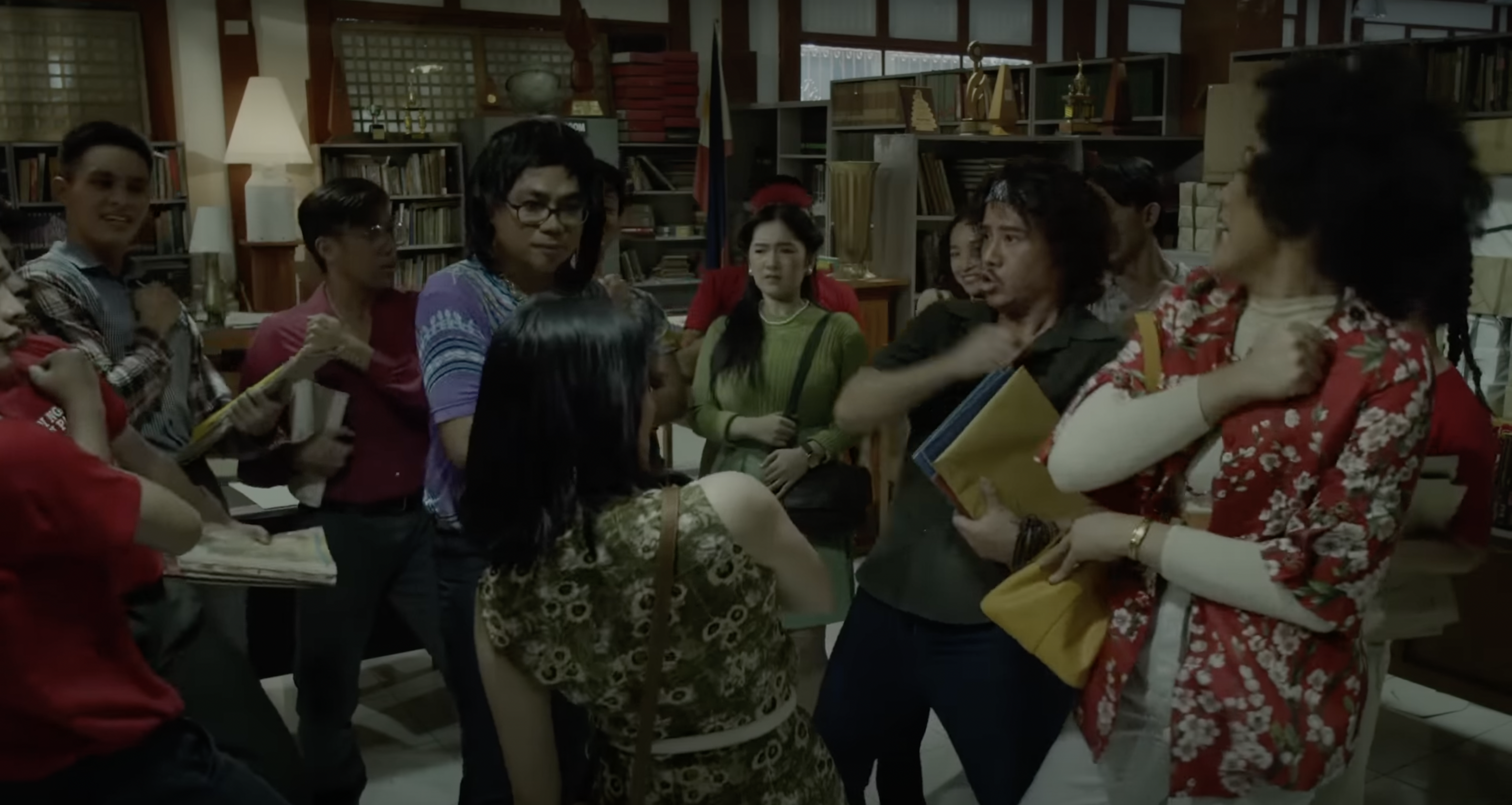
(On a side note: Do the people above really look like Piolo and Bea below? Just asking.) ..Postscript to Noynoy
A news item in the Philippine Daily Inquirer reported the successful march of thousands of peasants from various parts of the country, from Northern Luzon to Southern Mindanao, to Mendiola. There, the chants and speeches inevitably led to mentioning Cory Aquino’s failure to implement genuine agrarian reform during her term. Satur Ocampo, a senatorial candidate, specifically called on presidential candidate and senator Noynoy Aquino to make a public stand for genuine agrarian reform. This may be, in part, to rectify the failures of her mother in that aspect of her governance. Remember, one of the first promises of Cory during her electoral campaign against the dictator Marcos was to “implement agrarian reform and give the land to the farmers.” This did not happen, of course, as the Aquino administration pushed for an agrarian reform program far from thoroughgoing and comprehensive as its title suggested.
In the last paragraphs of the news item was a quote from Noynoy, answering Satur’s challenge.
But Aquino, who was in Cebu, did not take Ocampo’s potshots sitting down. “Satur should be the last person to call my mother a failure. The freedom of expression he is enjoying and the freedom given to all political prisoners under Marcos, he owed to my mother. Is that failure?” asked Aquino.
(This reminded me of a story Satur once related about Cory Aquino. It was after the strike of farm workers broke out in the Cojuangco-owned hacienda, the Hacienda Luisita in Tarlac, in 2004. The militant groups, in solidarity with the farmers, wanted to picket Cory’s house in Times Street, Quezon City. It also happened to be during the height of Hello Garci protests. Cory called on Satur to her house. She was irate. Cory told Satur of her immediate family’s limited involvement in the hacienda. She then reminded Satur: “Tandaan mo, ni-release ko si Joma (Sison).” Remember that after the Edsa uprising, said Cory, she released the political prisoners. Satur, then a rebel negotiator, went aboveground to negotiate peace with the Aquino government.)
Noynoy’s reaction had nothing to do with agrarian reform. But it reflects precisely how he thinks. It illuminates us on how he came to shun the Left in his senatorial lineup for 2010 elections: He did not want the leftists to be part of his lineup because “masama ang loob niya” that the latter picketed Cory’s house in 2004. He was angry with the Left, whom he believed did not acknowledge Cory enough for her role in restoring formal democracy in the country.
The statement that we (least of all, Satur) owe our so-called democracy to Cory Aquino shows Noynoy’s and the Aquino’s aristocratic attitude towards history and their role in it. We do not owe Edsa solely to Cory Aquino, least of all, to Noynoy. They, however, owe everything to us, the people.
Yellow Christmas in Bagumbayan
T’was three days before Christmas, and they were lined up in three, the more than 300 evacuees holed up in Bagumbayan Elementary School in Legazpi City. They were there because of yuletide grumblings of the nearby volcano, yet the evacuees still felt particularly lucky. After all, the classrooms were clean, it was smack in the middle of the city, and the pupils were out on vacation. Being in the city affords them the occasional visit of the politician, who hands out a few plastics of relief goods as photo opportunity.
But that day, not a few felt particularly fortunate. Word got around that the Aquino family had personally bought the relief goods to be distributed. Sen. Noynoy and his trusty running mate, Sen. Mar Roxas (more famous for marrying Korina Sanchez than anything else, as far as the evacuees were concerned), would be there to hand over some bags of goods. Tradition has it that the politicians ceremoniously hand out a couple of those bags to the needy folk as the photographers click away. After a few bags, the gift-giving will be turned over to lesser people to finish up the task. The photos end up in the papers the next day — images of a politician with a bleeding heart for the poor and downtodden.
Noynoy’s own local yellow army of liberals was of course there, but there were more than a few teachers and curious folk who gladly wore yellow that day to welcome their hero. Also as is costumary, there was a huge streamer that welcomed the party.
Lunchtime arrived but the organizers had asked the lined up folk to wait in the sun for Noynoy and Mar to arrive before being handed out goods. A huge sound system was set up, in a stage adjacent to the queues. There the luminaries waited, and behind them tarpaulins declaring Noynoy’s formidable lead in the surveys. (One tarpaulin had a collage of newspaper banner stories declaring the senator’s commanding lead over Manny Villar.)
After taking some photos of the crowd, I went to the stage, partly to survey the crowd and partly to evesdrop on the yellow supporters. One of them were loudly complaining about two volunteers who stood in front of the queues, ready to assist in the handing out of relief goods. They wore orange, he said. It might look like Villar, not Noynoy, was the one handing out the goods. He demanded to have the two volunteers removed in front, but relented to asking them to change their shirts instead. They, of course, were asked to wear yellow.
It was past 1 pm when the posse arrived, expectedly mobbed by the crowd. Jesse Robredo, the famed Naga City mayor, walked in front of Noynoy, deflecting outstretched arms reaching for the latter. It was strange, because Robredo, not Noynoy, did win the Ramon Magsaysay Award for his administrative work in Naga. But it was Noynoy, who did not so much as win an award for the best congressman or senator, that the crowd wanted and seemingly admired. Somehow, it reminded me of The Jerks who fronted for an Eraserheads concert in 1995 and was roundly booed. The crowd did not want the better band (at that point, at least); they wanted the uso.
The crowd wanted Noynoy. He was gracious, for sure, and looked appreciative of the adulation. But he was no Kris Aquino, who basked in the glow of the limelight her entire life. Walking through the throng, he had a smile that was wide as it was contorted – like he was a bit overwhelmed. Cory must have felt the same during her time. Both were thrust into that role by circumstances. And though they had enough Ninoy Aquino in them to not shirk from the challenge, both were reluctant to fill the role. Cory, at least, was in every way a hero during her time – she lost a husband and then went on to rally a people to vote against the dictator. Noynoy has done no such thing yet. He is no hero, the hero worship manufactured by a political machinery pandering to a people’s disgust with the current government. He promises change, like Cory promised – but failed to deliver – change.
Like his mother, Noynoy could only oblige the crowd. He shook their hands and handed out the first few bags of goods then took the mike to address the crowd, before retreating to his entourage of yellow-clad supporters. There would be more obligations to fulfill.
‘Crooning the Night Away’ now in ‘Reportage’
I should have done this a long time ago. I managed to migrate most of the content of my old blog (pangkulitan.motime.com) from 2005 to September 2008 to this newish one (November 2007 to present). I finally had the time (though not still enough) to manually copy the blog entries and brave the torrent of username-and-password inquiries from Motime. The latter, it seems, is now on verge of closing down.
The old blog, appropriately titled “Crooning the Night Away”, mostly contains forays into pop culture criticism or something resembling it. For its header, I placed a Bertolt Brecht quote that I found from Jeannette Winterson’s blog (hah): “In the dark times, will there also be singing? Yes, there will be singing about the dark times.” I suppose it was originally in German, so I don’t know if Winterson translated it, or copied it from one of the translations of Brecht’s work.
Anyway, this newish blog, now in WordPress (hurray), is an attempt at “professionalizing” my blogging. Hah. For a while, I struggled to maintain both blogs and both worlds (journalism and, well, trivial pursuits like watching films, etc.). But I have since come to realize that the title for this WP blog is, after all, “Reportage, etc.” It can be about anything.
A lot of the stuff here is usually on the “etc.” part of the title, but I am determined to continue with my reportage (political or cultural), wherever it may lead me.
For the “Crooning” entries, click on the links to old blog entries in the lower, lower right column of this blog’s homepage — from December 2004 to September 2008.
Robert Fisk, depressing but courageous journalist
“I believe journalists should be (passionate and intense). This business where we have to go, oh, we have to give 50% of the story to one side, and 50% to the other in order to be ‘partial’ is absolute rubbish. We should be partial. We should say who the bad guys are. We should denounce the Syrians when they commit murder in Hama, and the Iraqis when they gas people, and the Israelis when they massacre refugees on the road to southern Lebanon.
“You know, if we were covering the slave trade, would we give equal time to the slave ship captain? No. We would talk to the slaves, wouldn’t we? If we were present in liberation of the Nazi extermination camps, do we give equal time to the spokesman of the SS? Forget it. We talk to the survivors, and talk about the victims. When I was in Jerusalem in August of 2001, that’s when a suicide bomber blew up a pizzeria full of women and children. I went and wrote about the women and children I saw dead in front of me. Israeli children, of course. I didn’t give half of my story to the Islamic Jihad spokesman. The same as Sabra and Chatila, I didn’t write about the IDF [Israel Defense Force], I wrote about the victims.
“So we should have a side. It should be a moral side. Okay, we may get it wrong occasionally. But if we are not gonna write like that, what the hell is the point of being there and taking the risk and sending a correspondent all over the world?”
- Robert Fisk (35:28 of this video)


1 comment